

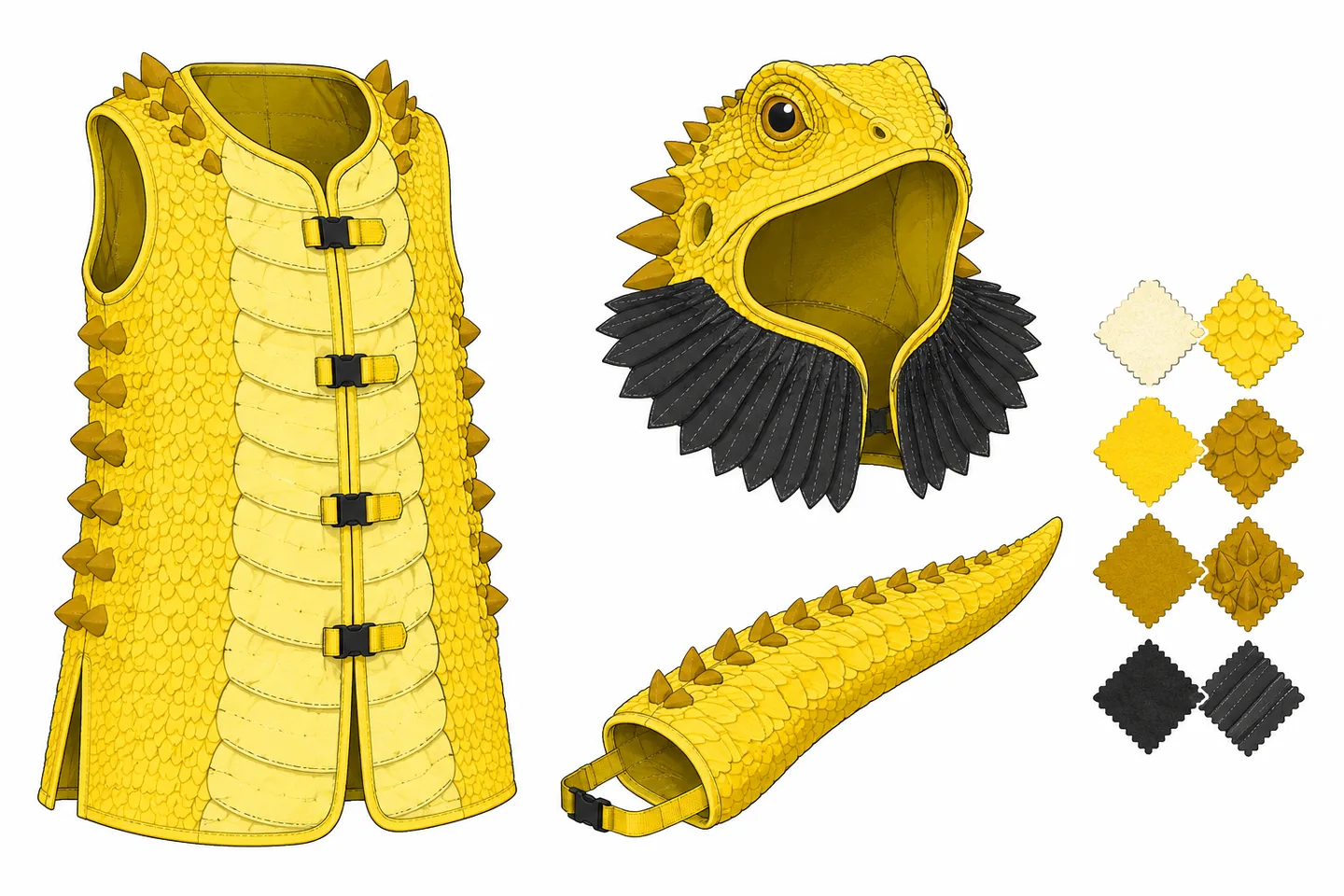
A bearded dragon costume for humans needs a few recognisable features: a broad head, a flared beard, textured clothing and a tapering tail. Build around those shapes before adding small details. A tan outfit with a soft hood and detachable accessories can convey the animal without a bulky, enclosed suit.
Start with the setting. A costume for photographs can have a wider silhouette than one worn on stairs, in a crowded room or while accompanying children. Decide whether you need to sit, eat, carry a bag or wear a coat. Those requirements should determine the construction, rather than become problems to solve afterwards.
Choose the features that matter
Use reference images to study the head outline, throat and tail rather than copying every scale. UC Davis Veterinary Medicine’s bearded dragon care guide provides background on the animal. Translate the rough appearance into soft fabric shapes; costume spikes need no hard points.
- Beard: make a fan-shaped panel below the chin, with flexible triangular edges and a darker centre.
- Head: use a broad hood or cap with side panels and fabric eyes above your own eye line.
- Texture: concentrate scale patterns on the shoulders, back and tail, leaving joints flexible.
- Colour: choose tan, brown, rust or muted orange, with darker markings to separate the main shapes.
A realistic version can use subdued colours and small scale patterns. A humorous version might have oversized fabric eyes or an exaggerated beard. Keep the head and throat as the focus: if every feature is enlarged, the outfit becomes harder to move in and may read as a general monster.
Pick a wearable format
Coordinated separates are a straightforward starting point: trousers, a long-sleeved top, a hood, a beard and a removable tail. Existing clothing gives you a base that already fits. Attach decorations to removable panels if you want to wash or reuse the clothes separately.
A sleeveless tunic offers more room for texture and tail attachments. Keep the sides loose enough for reaching and bending, and check its length while sitting. A front opening can make dressing easier than pulling a decorated garment over your head.
A full-body suit needs more planning. Work out how to reach the fastening, remove the headpiece, use the toilet and access pockets before adding padding. Try the undecorated base on with the shoes and underlayers you expect to wear. Leave room for movement without allowing cuffs or hems to trail.
Make the beard and headpiece first
Cut a paper outline to judge the beard's proportions, then make a soft fabric sample. Hold it below the chin and test speaking, turning your head and looking down. The upper edge should stay clear of your mouth. Shorten any points that rub against your neck or catch on the collar.
Layered felt can suggest spikes without a rigid framework. Make a small row of overlapping triangles before cutting the full set, so you can check the weight and spacing. Support the beard from the garment or hood rather than tightening a cord around your neck. Position its closure where you can reach it.
For the headpiece, add broad side panels to an open-faced hood or cap. Place decorative eyes above your forehead or towards the sides; they should not determine where you look through the costume. Keep hard components away from the face and check that the headpiece stays in place when you bend forwards.
Make the beard removable if you expect to eat or talk for long periods. Test its attachment several times before decorating over it. A fastening that looks tidy but needs another person to undo it is inconvenient when you need to take a break.
Add texture selectively
Printed fabric, quilting and rows of felt shapes can all suggest scales. Try one method on a small offcut first. Fold and stretch the sample as the finished garment will move, checking whether the decoration puckers the fabric or creates an uncomfortable stiff patch.
Use larger shapes across the upper back and shoulders, then smaller markings along the tail. Leave the elbows, knees, waist and underarms relatively plain. This keeps the areas that bend from becoming crowded with overlapping pieces. View the outfit from a few steps away before adding more detail. Check the back in a mirror as well: uneven placement is easier to correct before all the pieces are secured.
Colour contrast can do work that extra padding cannot. A lighter chest panel separates the torso from a dark beard; darker side markings give the body definition. Keep the palette consistent across the hood and tail so the removable parts still look like one costume.
If you use face makeup, follow its instructions and test it in advance. The FDA’s costume and makeup safety guidance covers testing makeup and choosing colours suitable for the intended area. Fabric markings are an alternative if you prefer to leave your face uncovered.
Build a tail you can manage
Sketch a tapering tail and test its length against your stride before making the final version. Keep the tip soft and clear of the floor. A long tail may suit a posed photograph but become awkward around chairs, doorways and other people's feet.
Use enough lightweight filling to hold the shape without making it rigid. Support the base across a reinforced section of the garment rather than one small attachment point. Try it on before closing the seams: if the tail pulls the tunic backwards, reduce its weight or reconsider the attachment.
A detachable tail makes sitting and transport easier. Practise removing it while wearing the rest of the outfit, and arrange somewhere to put it during the event. Do not rely on holding it in one hand whenever you walk; that leaves fewer options for carrying belongings or using a handrail.
The CPSC’s costume safety guidance addresses fit, trailing material and visibility. For outdoor wear in low light, include reflective details where they remain visible rather than hiding them beneath the tail or tunic.
Test the finished outfit
Keep your face open where possible. FDA guidance for Halloween costumes also emphasises avoiding excessive length that could cause tripping. Check the entire outfit together: a hood that sits correctly alone may shift when the beard or shoulder panels are attached.
Wear the costume long enough to notice rubbing, restricted movement or uncomfortable warmth. Thick padding and several fabric layers can make an outfit less comfortable indoors. Make the hood and outer pieces easy to remove, and stop the trial to adjust anything that obstructs sight or breathing.
- Walk, turn and use stairs, checking your view of the floor and the clearance around your feet.
- Sit in a chair and stand again. Check whether the tail, hem or chest panel catches.
- Reach for a door handle, use your phone and retrieve items from your pockets.
- Put on any coat or bag you need and check that it does not displace the headpiece.
- Remove the costume without help, then inspect seams, closures and loose decorations.
Use ordinary, well-fitting footwear unless an added cover has been tested without interfering with the sole or fastening. Check material labels and keep fabric accessories away from flames and heaters. Pack removable pieces separately, with the beard and tail uncompressed, and leave time for a final fit check after dressing.